

Comparing Cutting-Edge Nonsurgical Thyroid Treatments: RFA and nsPFA
- Richard J. Harding, MD, FACS

- Jul 19, 2025
- 3 min read
Updated: 5 days ago
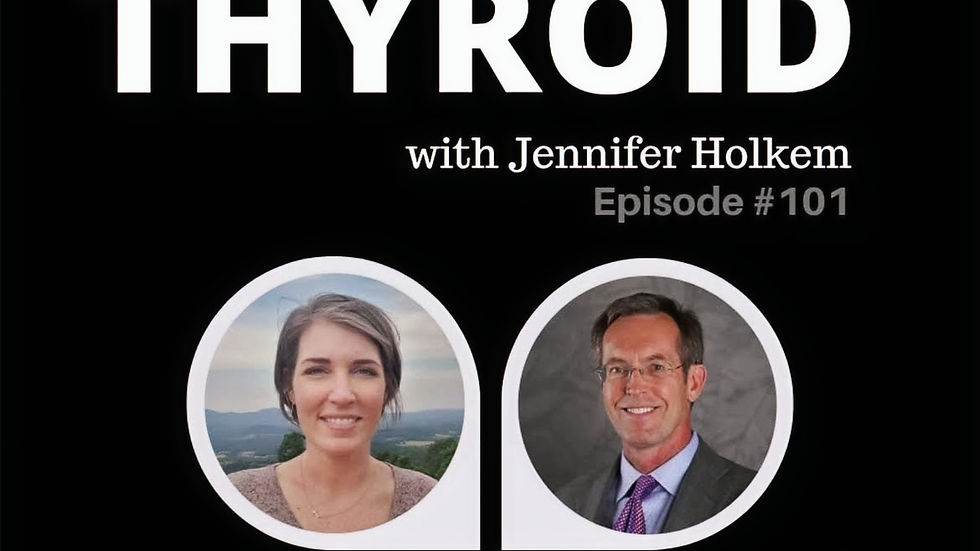
In a powerful episode of the Save Your Thyroid podcast, host Jen welcomes renowned endocrine and thyroid surgeon, Dr. Richard Harding. They dive deep into two groundbreaking technologies that are revolutionizing thyroid nodule care—Radiofrequency Ablation (RFA) and the emerging frontrunner, Nanosecond Pulsed Field Ablation (NSPFA).
What’s New in Thyroid Treatment?
Dr. Harding shares how these minimally invasive procedures are shifting the paradigm away from traditional surgery. RFA, already well-established, uses thermal energy to treat benign nodules. NSPFA, however, is the rising star. It harnesses ultrashort electric pulses to target tissue with remarkable precision and minimal thermal damage. This is a major leap forward, especially when treating nodules near delicate structures like the recurrent laryngeal nerve.
Why NSPFA Is Generating Buzz
NSPFA shines for its:
Safety near critical anatomy, making it a game-changer for hard-to-reach nodules.
Shorter treatment times and reduced downtime.
Lower risk of vocal changes or damage.
Encouraging feedback from patients who have embraced the non-surgical route.
Dr. Harding doesn’t just highlight the science. He brings real-world context from the clinic. He discusses who makes ideal candidates, how outcomes compare, and what to expect during recovery.
Eye on the Future
The conversation also tackles important questions:
Will NSPFA become the standard for benign thyroid nodules?
Can it be used for malignant lesions down the line?
How accessible are these treatments—and how do we balance innovation with cost?
By the end of the episode, it’s clear: this isn’t just about new tools. It’s about reimagining thyroid care as more precise, patient-centered, and empowering.
For Patients & Practitioners
Whether you’re navigating treatment decisions or exploring clinical adoption, Dr. Harding offers thoughtful advice. His message is clear: informed choice is essential. The best options are often those that preserve not just health—but quality of life.
Understanding Thyroid Nodules
Thyroid nodules are common. Many people have them, but not all require treatment. A thorough evaluation is essential. This includes imaging studies and sometimes a biopsy. The goal is to determine if the nodule is benign or malignant.
The Role of RFA in Treatment
Radiofrequency Ablation (RFA) is a well-established method for treating benign thyroid nodules. It uses heat to destroy the tissue. The procedure is minimally invasive. Patients often experience less pain and a quicker recovery compared to traditional surgery.
Advantages of NSPFA
Nanosecond Pulsed Field Ablation (NSPFA) is a newer technique. It uses short electric pulses to target tissue. This method minimizes damage to surrounding areas. Patients report shorter recovery times and fewer side effects.
Patient Experiences
Feedback from patients is crucial. Many express satisfaction with both RFA and NSPFA. They appreciate the reduced recovery time and the ability to return to normal activities quickly.
Future of Thyroid Treatments
The future of thyroid treatments looks promising. As technology advances, we may see more options for patients. The focus will remain on safety, effectiveness, and patient satisfaction.
Conclusion
In conclusion, the landscape of thyroid nodule treatment is evolving. With advancements like RFA and NSPFA, patients can expect better outcomes. These methods offer hope for those seeking effective, minimally invasive solutions.
Watch the video
Listen to the audio
00:00 Introduction to Thyroid Nodule Care
01:55 Understanding Radiofrequency Ablation (RFA)
05:12 Exploring Nanosecond Pulsed Field Ablation (NSPFA)
09:23 Safety and Precision in NSPFA
10:37 Treatment Duration and Patient Experience
17:28 Risks and Side Effects of NSPFA
19:02 Ideal Candidates for NSPFA
22:25 Patient Feedback and Outcomes
29:21 Exploring Treatment Modalities for Thyroid Nodules
31:50 Understanding Nodule Growth and Treatment Challenges
35:06 The Future of NSPFA in Thyroid Care
38:05 Cost and Accessibility of New Treatment Technologies
41:00 Potential for NSPFA in Treating Malignant Lesions
43:40 Advice for Patients with Thyroid Nodules
45:44 Guidance for Clinicians on Adopting New Techniques
48:20 Final Thoughts and Community Impact
55:42 Introduction to the Podcast and Resources


Comments